Thursday, March 15, 2012

Peppers

Peppers

 Hot Lemon


·        Wrinkled 3-4 inch long fruits are very hot. 

·        These fruits are best used fresh or dried in sauces. 

·        For the connoisseur, try them stuffed with a variety of cheeses. 

·        Shelter plants outside for a week before planting. 

·        Plant 18-24 inches apart in rows which are 2-3 feet apart. 

·        Plants require sun and well-drained soil. 

·        Plant with top of root ball ½ inch below the soil. 

·        Harvest 70 days after plants are set out.


Sweet Banana


·        Long, tapered fruits begin as light green to yellow and change to orange and red. 

·        Delicious in sauces, fried, or in salads. 

·        These are also good when stuffed with cheeses or meats. 

·        Set plants 15-18 inches apart in rows which are 2-3 feet apart. 

·        Plant in a sunny area in well-drained soil with root ball ½ inch below the soil surface.

·        Water as needed by soaking the ground around the plants and fertilize lighting as fruits emerge.

·        Harvest 72 days after plants are set out.


Hot Ancho (Poblano)


·        Ancho peppers are the dried version of Poblano, or "people" peppers.
·        Their flavor is somewhat sweet and somewhat raisin-like, with medium heat.
·        Peppers are dark rusty red when mature.
·        The heart-shaped pepper is 4 inches long and tapered on the end.
·        Ancho  peppers can be strung on ropes and made into wreaths.
·        Sun: Full Sun
·        Sowing Method: Indoor Sow
·        Days to Maturity: 65 days
·        Height: 18-24 inches
·        Spread: 16 inches
 
 
Sweet Pepper – California Wonder


·        Particularly good for stuffing, but also tasty enough for salads, California wonder is an excellent sweet bell for cold climates.
·        In longer season climates, peppers turn bright red after maturing.
·        Excellent for the freezer.
·        More vitamin C than an orange!
·        Days to Maturity: 75
·        When to Sow Outside: 3 to 4 weeks after last frost.
·      Soil temperature should be at least 65 degrees and outside temperature should be at least 70 degrees.
·        Row Spacing: 2'
·        Days to Emerge: 10 – 25
·        Plant 18" apart

Pumpkins

Pumpkins

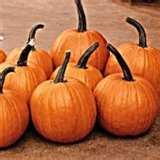
Pumpkins are a warm-season vegetable that can be grown throughout much of the United States. They require a fairly long period (3 - 4 months) of hot weather and cannot tolerate any frost. Besides being used as Halloween jack-o'-lanterns, pumpkins are used to make pumpkin pies, soup, bread, butter, custard, and even cookies


What do you need?

·        3 to 4 months of sunny weather, with day time temperatures of at least 70 F, preferably hotter.

·        A very sunny location. They won't grow under trees and in the shade.

·        Rich soil, that doesn't sit under water. Pumpkins like lots of organic matter: manure, grass clippings, leaves, or compost should be worked into the soil ahead of planting.

·        Pumpkin Seeds

·        Water. They do need to be watered, a good soaking, at least once a week.

When to Plant

·        Pumpkin is a very tender vegetable.

·        The seeds will germinate in cold soil, and the seedlings are injured by frost.

·        Do not plant until all danger of frost has passed, and the soil has thoroughly warmed.

·        The packets of seeds tell you when to plant in your area, but basically, it is late April through July in the deep South; and from late May to mid-June in the north.

 Spacing and Depth

·        Pumpkins grow as a vine, which means they take up a LOT of space.

·        Pumpkins require a minimum of 50 to 100 square feet per "hill".

·        Plant four or five seeds per spaced an inch or two apart in one hole (called a "hill").

·        Leave 5 to 6 feet between each hill.

·        When the young plants are well-established, thin each hill to the best two or three plants.

·        There are newer "semi-bush" varieties that do not vine quite so much (of course the yield is also smaller). Plant semi-bush varieties one inch deep (four or five seeds per hill) and thin to the best two plants per hill. Allow 4 feet between hills and 8 feet between rows.

·        Plant miniature varieties one inch deep, with two or three seeds every 2 feet in the row. Rows should be 6 to 8 feet apart, with seedlings thinned to the best plant every 2 feet when they have their first true leaves.

·        Plant bush varieties one inch deep (1 or 2 seeds per foot of row) and thin to a single plant every 3 feet. Allow 4 to 6 feet between rows.

 Care

·        Pumpkin plants should be kept free from weeds by hoeing and shallow cultivation.

·        Irrigate if an extended dry period occurs in early summer.

·        Pumpkins tolerate short periods of hot, dry weather pretty well.

·        Bees, that are necessary for pollinating squash and pumpkins, may be killed by insecticides. When insecticides are used, they should be applied only in late afternoon or early evening when the blossoms have closed for the day and bees are no longer visiting the blossoms.

Harvesting

·        Pumpkins can be harvested whenever they are a deep, solid color (orange for most varieties) and the rind is hard. If vines remain healthy, harvest in late September or early October, before heavy frosts.

·        If vines die prematurely from disease or other causes, harvest the mature fruit and store them in a moderately warm, dry place until Halloween. Cut pumpkins from the vines carefully, using pruning shears or a sharp knife and leave 3 to 4 inches of stem attached. Snapping the stems from the vines results in many broken or missing "handles." Pumpkins without stems usually do not keep well.

·        Wear gloves when harvesting fruit because many varieties have sharp prickles on their stems.

·        Avoid cutting and bruising the pumpkins when handling them. Fruits that are not fully mature or that have been injured or subjected to heavy frost do not keep. Store in a dry building where the temperature is between 50 and 55°F.


Sugar Pumpkin


·        Sugar pumpkins are only about 6 to 8 inches in diameter.

·        The best choice for baking.

·        From one pumpkin of this size, you’ll typically be able to get the same amount of puree that you do from a can of pumpkin (15-16 oz.), or perhaps a little bit more.


Ghost Rider Pumpkin


·        "115 days.

·        Attractive, dark orange, round, ridged fruits grow 16"" across, weigh up to 20 lbs., and have yellow-orange flesh.

·        Ideal for carving or cooking. , roasted seeds and Jack-O¦-Lanterns.

·        Plant in groups 6-8' apart, or sow in rows, thinning to one plant every 2-3'.

Spinaches

Spinaches


New Zealand Spinach


·        New Zealand spinach is not a true spinach but is very popular for growing during warm summer weather, when regular spinach can "bolt". A heavy yield can be harvested throughout the summer. It is very high in vitamin content. Use as you would regular spinach.

·        Approximately 70 days to maturity.

·        Space rows up to 2 feet apart depending upon space; plants will "sprawl".

·        When seedlings are 3 to 4 inches high, thin to about 12 inches apart.

·        The leaves are triangular in shape, and very succulent. They grow on long, rambling stalks.

·        The seeds are triangular as well and the plant will reseed if you let it.

·        It tends to spread and grow low to the ground.

·        It can be used as a living mulch since it so effectively covers the soil in a vegetable bed.

·        This green keeps on growing and seems to be unaffected by the bugs and problems that affect other greens.

·        This is a very robust plant. It tolerates drought, bugs, salt and poor soil.  

·        It does much better in heat than true.

·        New Zealand spinach can be grown in the summer when other greens may not grow so well.


Beetberry Spinach


·        (Strawberry spinach, Raspberry chenopodium) Family: Chenopodiaceae

·        Days to maturity: 40 to 60

·        Growing to only about 8 inches tall, the sweeping branches bear many soft leaves and are studded with multitudes of berries.

·        Sweet but strange, bright red, heavily seeded berries occur all along the stems of this lamb's-quarters-like plant.

·        The berries make a colorful and edible accent in the garden and in salads.

·        The greens are deliciously edible in salads or as a pot herb.

·        Best yet, the parsnip-like roots are crispy, sweet, and delicious, white but marbled with beet red, with just a hint of beetiness to the taste, and may be consumed fresh or cooked in soups.

·        Plant prefers full sun to part shade and regular garden soils.

·        Sow in spring.

·        Easy germination.

Red Malabar Spinach

·        This beautiful plant is not a true spinach but a different species (basella rubra).
·        70 days.
·        'Malabar Red Stem' features thick red stems that twine around any support that you provide for it.
·        Use the medium-green leaves as you would spinach.
·        Begin harvesting individual leaves and tender shoot tips 55 days or so after seeding.
·        Continue harvesting throughout the summer.
·        The newer leaves and shoots will be more tender than mature foliage.
·        Heat loving.
·        Frost sensitive.
·        Vigorous climbing vines grow through summer into fall.
·        Dark green leaves and deep red/purple stems.
·        Mild Swiss chard taste.
·        Use leaves and young stems sparingly in salads or stir-fries.
·        Transplant outside after danger of frost.
·        Thin to 6" between plants, rows 12" apart.
·        Provide trellis.