Tomatoes/Tomatillos
· Devote a prime, sunny spot to tomatoes, which will grow into a tall screen of green foliage studded with ripening fruits in mid-to late summer. Tomatoes need at least 8 hours of sun to bring out their best flavors. Stake, trellis, or cage the sprawling plants to keep them off the ground. Decide on a support plan before you set out your plants.
· Tomato plants should be grown in a warm area and receive plenty of sunlight, so choose a sunny spot in your garden.
· Relocate your tomato plants in different parts of your garden each year to avoid diseases.
· Optimum temperatures for growing tomatoes are between 65 and 85 degrees F.
· Plant your seeds indoors 10 to 12 weeks before setting outside.
· Plants should be at least 10" tall before transplanting outdoors.
· Place plants outdoors in shady area several days before transplanting outdoors.
· Shelter the transplants to prevent sunburn, wilting, and rain damage.
· Spring planting should occur when soil is warm.
· At least 3 weeks after last frost and when temperatures remain above 70 degrees F.
· You can plant early if you use water towers. To prevent branches from breaking from the weight of tomatoes, use 5 to 6 ft. tall cages.
· To tie plants to stakes, use soft strips of cloth.
· Check indeterminate plants regularly, and pinch off suckers and side branches where leaves join the stems.
· Plants can grow 1 to 6 ft. tall.
· Space robust, long-vined, indeterminate varieties about 3 feet apart.
· Stocky determinate plants can be grown at tighter 2-foot spacing.
· A single patio tomato will fill an 18-inch-wide container.
· You can combine fast-maturing varieties with special season-stretching techniques to grow an early crop, but wait until the last frost has passed to transplant main-season tomatoes.
· Tomatoes take up nutrients best when the soil pH ranges from 6.2 to 6.8, and they need a constant supply of major and minor plant nutrients. To provide the major nutrients, mix a balanced timed-release or organic fertilizer into the soil as you prepare planting holes, following the rates given on the fertilizer label. At the same time, mix in 3 to 4 inches of compost. The compost will provide minor nutrients and help hold moisture and fertilizer in the soil until it is needed by the plants.
· To grow really strong tomato plants, we recommend deep planting, so that two-thirds of the plant’s stem is buried. If you plant deeply, they will sprout roots along the buried stem, so your plant will be stronger and better able to find water in drought. Try it (but not with other veggies, just tomatoes).
· Cover the ground with 2 to 4 inches of mulch to keep down weeds and keep the soil evenly moist. Straw and shredded leaves make great mulches for tomatoes.
· If summer droughts are common in your area, use soaker hoses or other drought-busting techniques to help maintain even soil moisture – the key to preventing cracked fruits and blossom-end rot. Make watering easier by using soaker hoses around the plants and covering with mulch.
· As summer heats up, some tomatoes have trouble setting fruit. Be patient and you will start seeing little green tomatoes again when nights begin cooling down. Meanwhile, promptly harvest ripe tomatoes to relieve stressed plants of their heavy burden.
· If you live in an area where summertime temperatures are typically in the 90s, be sure to choose some heat-tolerant tomato varieties bred for their ability to set fruit under high temperatures. Tomato plants grow long roots, which is why it’s so important to water deeply.
· By late summer, plants that began producing early in the season will show signs of exhaustion. You can rescue those sad tomato plants. It will take but a few minutes to coax out new growth by pruning away withered leaves and branches. Then follow up with liquid fertilizer and treatments for leaf diseases or insects, if needed.
· Humid weather creates ideal conditions for fungal diseases like early blight, which causes dark spots to first form on lower leaves. Late blight is a more devastating disease that kills plants quickly; the only way to control it is to protect against it by spraying the leaves with an approved fungicide such as chlorothalonil or copper and to keep the garden clean of tomato and potato debris.
· Of all crops, tomatoes are the most likely to get problems, but many hybrids have been developed that resists the worst or most prevalent diseases. Check your variety online to see what diseases it might resist. Often diseases tend to be worse in one region of the country and practically non-existent in another, which is why it’s important to have varieties suited to your area.
· In mid-summer, big green caterpillars called tomato hornworms eat tomato foliage and sometimes damage fruits. One or two hornworms can strip a plant leafless.
· As tomatoes begin to ripen, their color changes from vibrant medium-green to a lighter shade, with faint pink or yellow stripes. These “breakers,” or mature green tomatoes, can be chopped into salsas, pickled, or pan-fried into a crispy appetizer.
· Tomato flavors become much more complex as the fruits ripen, so you have good reason to wait. The exact signs of ripeness vary with variety, but in general, perfectly ripe tomatoes show deep color yet still feel firm when gently squeezed.
· Store picked tomatoes at room temperature indoors, or in a shady place outside.
· Never refrigerate tomatoes, because temperatures below 55° cause the precious flavor compounds to break down.
· Bumper crops can be frozen, canned, or dried for future use.
Mr. Stripey Tomato

· These huge, beefsteak-type red-and yellow fruits with a high sugar content are delicious and pretty to slice because of the bi-coloring.
· Although it is called Mr. Stripey, don't expect perfect stripes.
· This is an heirloom and no two tomatoes are ever the same.
· The background color of the tomato is yellow to light orange and the red often appears in little spots that align themselves in a stripes radiating from the stem end of the fruit.
· Indeterminate vines produce through the season.
· Space 24 to 36 inches apart.

· It produces white and yellow flowers and the fruit is round and firm.
· The fruit grows in clusters on this particular tomato plant.
· It can grow as high as six feet.
· It blooms from early spring to late summer.
· Plant the Abraham Lincoln tomato in a mostly sand to loamy soil mix.
· The pH should be 5.5 to 7.
· It needs to be in full sun (more than six hours of continuous sunlight per day).
· Keep this tomato watered well. The soil should be moist, but not be boggy. Be sure to pick an area that drains well.
· Water the Abraham Lincoln tomato at least an inch per week. Watering deeply is much better for the plant than watering a little bit each day. If the soil starts to dry out prior to the next week’s watering time, water again, deeply.
· Fertilize with a water-soluble quick release fertilizer made for tomatoes. You can also use an organic fertilizer, such as fish emulsion. Follow the instructions on the package for fertilizing this plant. If you plan on eating the food, you should use an organic fertilizer if at all possible.
· Keep the Abraham Lincoln from contacting disease or harboring pests. This plant is prone to verticillium or fusarium wilt. To help prevent this, do not use fertilizers heavy in nitrogen. Also, keep pests, such as tomato hornworms and spider mites, at bay by rotating the tomato’s location each year and deeply tilling the soil to expose pupae.

· 1-lb fruits are pale to deep orange beefsteak tomatoes originally from West Virginia.
· Thin-skinned, meaty, have few seeds and a fantastic sweet, tangy flavor. Juice and inside flesh have the same bright orange color as orange juice.
· Kellogg's Breakfast is an indeterminate plant, meaning that it keeps growing all summer and setting new fruit as it grows. You will definitely want to cage or stake this vine, and probably provide a bit of support for those huge tomatoes.
· If an unexpected late frost is forecasted, protect young plants with plastic sheeting or other cover.
· Set plants 2 feet apart
Silvery Fir Tree Tomato

· A Russian heirloom.
· An early season (55 days) dwarf tomato plant.
· Produces short, 2', determinate tomato plants with wispy, fern-like, silvery fuzzy leaves that yield moderate crops of bright-red, 2", 4-5 oz., flattened, round tomatoes.
· A perfect tomato plant for growing in small containers and hanging baskets. Good tomato plant for a patio garden.
· A perfect choice for a canning tomato and salad tomato.
· Disease Resistant.
· When to sow outside: Recommended for mild winter climates only: 1 to 2 weeks before average last frost and when soil temperatures are at least 60° F.
· Harvesting: Harvest tomatoes when fully colored and firm.
· About 1 month before the average first fall frost, clip all blossoms and any undersized fruit off the plant. This will steer all the plant’s remaining energy into ripening what’s left.
· If you have a lot of under ripe tomatoes near the end of the season, and a frost is approaching, pick them and store them indoors in a single layer away from direct sunlight to ripen.
Amish Salad Tomato
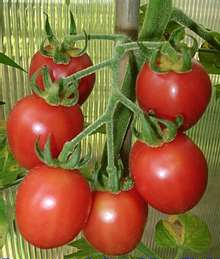
· 80 days. Lycopersicon esculentum.
· Plant produces high yields of flavorful 2 oz. round pink cherry tomatoes.
· The tomatoes are very sweet and grow in clusters of 6.
· Tomatoes last a long time on the vines without rotting.
· Very sweet and firm.
Black Cherry Tomato

· Sweet, rich complex, very sweet, rich smoky flavor, sweet and juicy flavor, very rich and sweet
· Cherry size, round, perfect round cherry
· Purple skin, deep red blackish hue, dark red flesh, purple skin, dusky purplish black, deep mahogany brown
· High yield, huge yield, abundant, huge clusters, large clusters, prolific
· Vigorous, tall, large, sprawling
· Early maturing, early season
· Crack/spilt resistant
· Very easy to grow
· 75 days
Sungold Select II Tomato

· Sungold select II belongs to the Solanum genus (Solanum lycopersicum 'Sungold select ii').
· 'Sungold select II' is considered an heirloom OP (open pollinated) cultivar.
· It is a fruit that typically grows as an Annual, which is defined as a plant that matures and completes its lifecycle over the course of a single year.
· Sungold select II is known for growing to a height of approximately 58 inches.
· Ensure a distance of 0.78" between seeds when sowing - look to sow at a depth of approximately 0.78".
· Try to plant in a location that enjoys full sun and remember to water moderately.
· Keep in mind when planting that Sungold select II is thought of as tender, so it is imperative to wait until temperatures are mild before planting out of doors.
· The USDA Hardiness Zones typically associated with Sungold select II are Zone 3 and Zone 14.
· Ensure your soil has a PH of between 5.5 and 7.5 as Sungold select II is an acidic to alkaline soil loving plant.
· By our calculations, you should look at sowing this variety about 42 days before your last frost date.

· The San Marzano tomato is thought to be the best tomato in the world for making pasta sauce. Grown in the rich volcanic soils near Mt. Vesuvius, they are thicker and sweeter than Roma's and have a stronger, less acidic flavor.
· San Marzano tomatoes need full sun to grow well, so choose a location that receives sunlight for at least seven hours per day.
· Prepare the chosen spot by overturning the soil with a spade or shovel and adding approximately seven pounds of compost for each square foot of garden area. Work the compost into the top two to four inches of soil.
· Once the seedlings have at least two leaves and are a minimum of three to five inches in height, they are big enough to transplant. For each tomato plant, dig a hole four to six inches deep.
· Adjust the depth, if necessary, to allow you to bury the entire plant, permitting only the top two leaves to be exposed. Leave 18 to 24 inches of space between each seedling and 36 inches of space between each row.
· Position the transplant in the center of the hole and push the dirt back around it, gently pressing to compact the soil around the main stem.
· Within 10 minutes of plating, give each seedling one gallon of warm water as this will help prevent 'transplant shock' and encourage outward root growth.
· Give new transplants two cups of warm water each day for one week. After one week, water the plants two to three times a week, depending on the amount of natural rainfall in your area. In dry climates or extremely hot weather, the watering schedule may need to be increased.
· Place mulch around the tomatoes 14 days after transplanting them. This will help the surrounding soil to retain moisture and will help prevent the growth of weeds. Spread the mulch around the base of the plant, creating a circle that is one inch thick and 12 inches in diameter.
· Stake the tomato plants six weeks after transplanting. Choose stakes that are half an inch thick and eight feet long, as the San Marzano tends to be a somewhat longer vine than your average tomato. Insert the stakes into the ground, planting them about 18 inches deep and three inches away from the base of the tomato plant. Tie the plant loosely to the stake to allow for continued plant growth.
· Agitate the plants when they begin to bloom. Two times a week, gently shake the main stalk as this will help to distribute the available pollen. This leads to an increase in fertilization and an overall amplification to plant yields.
· Wait 40 to 50 days after transplanting for tomatoes to appear.
· San Marzano vines tend to start bearing fruit a bit later in the year than some of their rivals, but once they begin, they are prolific producers offering a bountiful harvest until the first hard frost.
· The 3- to 4-inch tomatoes grow in small clusters that are ready to pick when they turn a deep, bright red.
Red Siberian Tomato

· 48 days.
· Lycopersicon esculentum.
· Plant produces good yields of flavorful 5 oz. bright red tomatoes.
· Plant is capable of setting fruit even at 38 degrees.
· One of the earliest varieties on the market takes only 7 weeks when transplanted outdoors.
· A popular variety grown in Alaska.
· An heirloom variety from Russia.


· The Black Prince tomato variety is a bit on the unusual side. First, it’s a very different shade — neither red nor black.
· It’s more of an oval shape, instead of round or beefsteak or even the standard “paste tomato” shape.
· The Black Prince variety is an heirloom tomato and comes to us from Russia, so it’s a fairly early tomato.
· The plant itself is a little on the wimpy side, without a lot of leaves or stems.
· Good yields.
· The flesh is a little soft, as with most varieties of black tomatoes, but reasonably firm.

· A very tasty pear shaped yellow tomato.
· Approximately 75 days to maturity from transplants.
· TRANSPLANTING: Plant outdoors in May when all danger of frost has passed and weather has warmed. Harden off seedlings.
· SPACING: Leave 2-3 feet between plants.

· This early-season heirloom, deep red inside and out, has a quaint folk name also given to red Corn and red Trillium.
· The plants begin producing clusters of 2in, 4oz fruits in only eight weeks.
· 55 days from transplant.
· Very early and high-yielding.
· Strong tomato flavor in medium, round, 4 oz. fruits that are a deep, dark red inside and out.
· Potato-leaved plants are fast growing.
Tomatillo-Gigante Tomato

· Physalis ixocarpa.
· Plant produces good yields of giant 4" diameter green tomatillos.
· This is the biggest tomatillo on the market.
· It is ripe when it falls from plant.
· Very popular in the Southwest United States for making salsas when combined with fresh, hot peppers.
· Size: 4" across.
· Days to Maturity: 100 days
· Sun: Full Sun
Tomatillo – Ground Cherry


· 65-70 days.
· This sweet and fruity ground cherry originated in Poland.
· When ripe it turns a golden orange color and drops to the ground.
· It makes a tasty jam, perfect for gift giving.
· An unusual and rewarding addition to fruit salads and smoothies. Will store up to 3 months in the husk.
· Ground cherries are so named because the cherry-sized berries are borne near the ground.
· The leaves of ground cherries are hairy or fuzzy and the plants grow 1-2' tall with lateral spreading growth.
· Preparation and uses: Ground cherries are eaten out-of-hand, or are used in desserts, sauces, preserves, fruit toppings, pies and salads.
· Harvest: Husk tomatoes usually do not ripen fully until after falling from the plant.
· Ground cherries ripen from green to yellow-gold.
Tomato – Mortgage Lifter

· Developed by M.C. Byles in the 1930’s, this heirloom tomato remains very much in demand in the Mid-Atlantic states. Mr. Byles, affectionately known as "Radiator Charlie" earned his nickname from the radiator repair business he opened at the foot of a steep hill on which trucks would often overheat.
· Radiator Charlie, who had no formal education or plant breeding experience, created this legendary tomato by cross-breeding four of the largest tomatoes he was able to find and developed a stable variety after six years of pollination and selection. He then sold his heirloom tomato plants for one dollar each (in the 1940’s) and paid off the six thousand dollar mortgage on his house in six years. It is said that each spring, gardeners drove as far as 200 miles to buy Charlie’s seedling tomatoes.
· 95 days.
· The large, slightly flattened, pink-red fruits that range from 1 pound to more than 3 pounds, are meaty, very flavorful and have few tomato seeds.
· The small Mortgage Lifter tomato seedlings will need to be introduced gradually to the outdoor weather and sunshine, or they may be burned.
· Set the seedlings out for an hour or two at first, in filtered sunlight, and sheltered from the wind.
· Increase the time the seedlings spend outdoors each day, allowing them a chance to become accustomed to outdoor growing conditions.
· The growing plants will require staking, as the fruit reach an average of 2 ½ pounds each.
· Mortgage Lifter will yield fruit 80 days after transplanting.
· When harvesting the heavy fruits, cut the stem above the fruit, rather than pulling, to avoid tearing the flesh.
Tomato – Brandywine Pink

· Each fruit can weigh up to a pound and a half.
· An heirloom dating back to 1889, 'Brandywine Pink' produces a thin skinned, pink fruit with a meaty body.
· Perfect for slicing, canning as a crushed Tomato, or as meal unto itself on a hot summer's day.
· Being a beefsteak variety, you won't get a large yield, but you will be rewarded with nicely matured and tasty Tomatoes.
· Fruits ripen 80-90 days from transplant.
· Height: 4-8'
· Exposure: Full Sun
· Spacing: 24-36"
Tomato – Black Krim

· Days: 75
· Size: Indeterminate
· Color: Purple-Black
· Season: Mid-Season
· Type: Heirloom
· aka Black Crimson and Black Crim)
· Originally from the Isle of Krim on the Black Sea in the former Soviet Union.
· This rare, and outstanding tomato yields 3-4" slightly flattened dark-red (mahogany-colored) slightly maroon, beefsteak tomatoes with deep green shoulders.
· Green gel around seeds.
· Fantastic, intense, slightly salty taste (which is great for those not wanting to add salt to their tomatoes).


